 (Image source: Gemini)
 You've probably noticed it while walking through the high-end districts of New York, London, or Seoul lately. That hyper-smooth, slightly plastic look that used to define the "wealthy" face is quietly disappearing. It's being replaced by something much more subtle and, frankly, much more human. We're now well into 2026, and the aesthetic world has hit a massive turning point. The era of the "frozen" forehead is giving way to the era of the "active" glow. This shift isn't just a change in taste. It's a technological revolution driven by peptides. If you've been keeping an eye on the market, you'll know that the demand for traditional fillers dropped by about 31% recently, while Botox use fell by 26%. People are tired of the risks and the maintenance. They're moving toward "pre-juvenation," which is all about keeping the skin's biological machinery running smoothly rather than just filling cracks with synthetic gel.
The Shift Toward Bio-Mimetic Skincare
So what does this actually mean for your morning routine? It means we're finally moving past the idea that "more is better" for volume. In major cities, the trend is now focused on skin quality. Patients are asking for treatments that make their skin look healthy and resilient, not just paralyzed. This is where peptides come in.
Peptides are short chains of amino acids that act as messengers. Think of them like the "software" for your skin cells. They tell your body to do things like produce more collagen, repair a damaged barrier, or relax a specific micro-tension. Instead of forcing a change through a needle, you're whispering instructions to your cells to behave as they did ten years ago. It's a much more elegant approach to aging.
The beauty of this bio-mimetic approach is that it avoids the "uncanny valley" effect. You know the one. It's when someone looks young but also slightly "off" because their face doesn't move when they laugh. By using peptides as the new gold standard for cellular signaling, urban professionals are achieving results that look entirely natural because they are natural. Your skin is doing the work itself.
How Peptides Mimic Injectable Results
You might be wondering if a serum can really compete with a needle. A few years ago, the answer would have been a polite "not quite." But the science has moved fast. We're now seeing signal peptides that trigger collagen and elastin production at levels we didn't think possible through topical application.
Take neuropeptides like Argireline (Acetyl Hexapeptide-8) or SYN-AKE. These are often called "Botox in a bottle," and for good reason. They work by inhibiting the SNARE complex, which is the same mechanism Botox uses to relax muscles. The difference? They do it at a superficial level. They don't paralyze the muscle completely, but they take the "edge" off those repetitive micro-tensions that cause deep expression lines.
Recent clinical data from 2024 and 2025 showed that these neuropeptides can reduce wrinkle depth by up to 52% within just four weeks of consistent use. Although a traditional neurotoxin might give you an 80% reduction in a week, it comes with the risk of drooping or asymmetry. Peptides offer a safer, more sustainable middle ground. Plus, new delivery systems like the ones found in SkinCeuticals P-TIOX are now targeting nine different types of contraction lines, including those tricky areas around the neck and under the eyes that needles often struggle to hit safely.
The Rise of the Needle-Free Urban Clinic
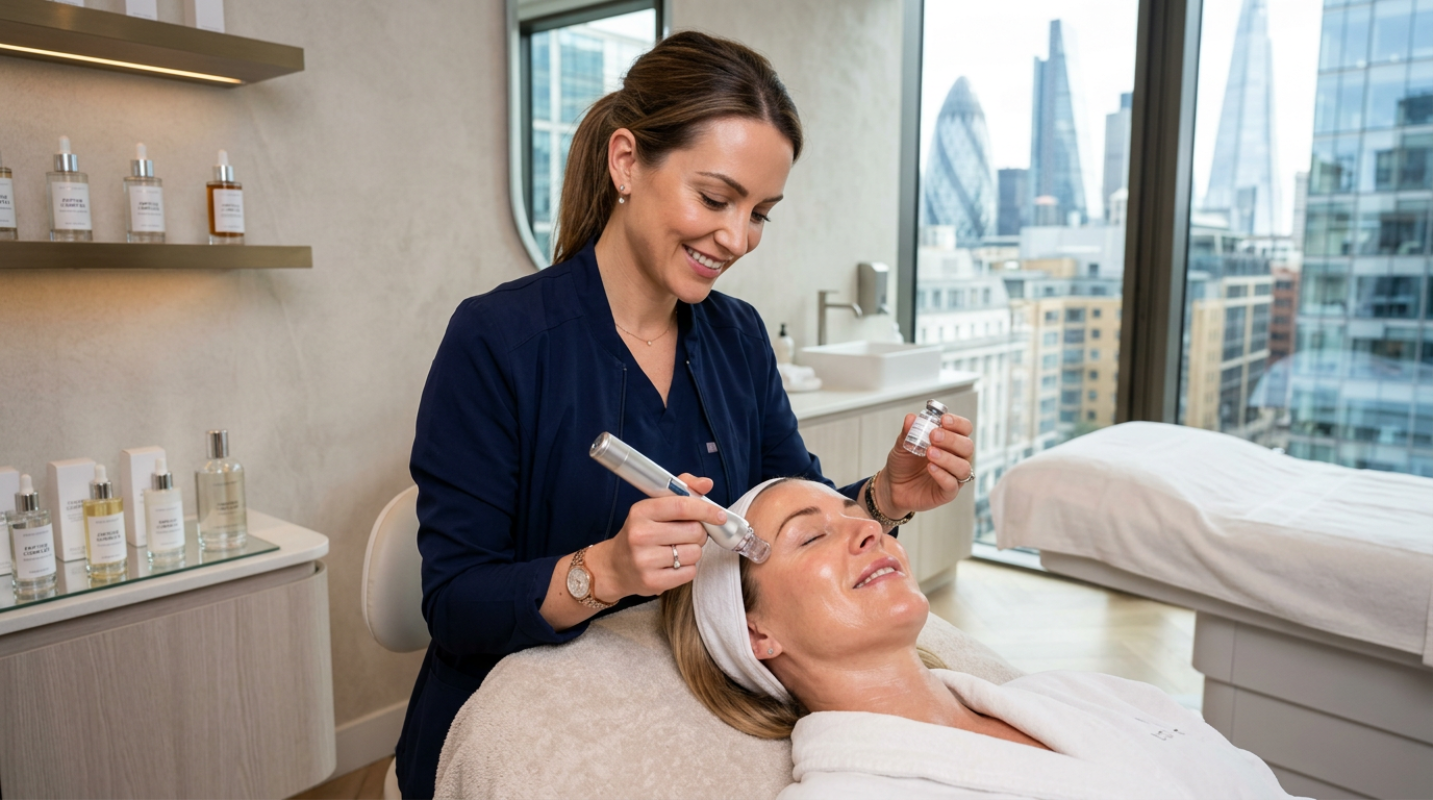
If you step into a top-tier dermatology clinic in 2026, you'll see a very different setup than you would have five years ago. The focus has shifted toward "Integrated Skincare." This means clinics are combining professional-grade peptide infusions with technologies like microneedling or jet infusion. It's all about getting those high-concentration peptides deeper into the dermis without the downtime of traditional injections.
Urban professionals are leading this charge because they simply don't have time for bruising or swelling. They need to be in a boardroom or on a video call the next morning.
- Seoul (The Innovation Hub): At the KLEAM Skin Clinic in Myeongdong, the "Needle-Free Rejuran Booster" has become the most requested treatment.² It uses high-pressure transdermal delivery to blast salmon-DNA peptides into the skin. It’s painless and leaves no marks.
- London (The Tweakment Capital): Clinics like Eskulap are reporting a surge in "Micro-Botox" techniques.¹ This involves mixing ultra-diluted toxins with rich peptide serums and applying them superficially to improve pore size and texture rather than freezing the muscles.
- New York (The Science-First Market): In NYC, flagship labs are seeing record sales for peptide-based wrinkle correctors. These are marketed specifically to people who want to extend the life of their injectables or replace them entirely.
Safety, Efficacy, and the Long-Term Benefits
One of the biggest arguments for making the switch to peptides is the risk profile. Traditional fillers have a dirty little secret: they migrate. Over time, that filler you put in your cheeks can end up in your jawline or under your eyes, leading to a puffy, distorted look. Peptides don't have this problem. They are processed by the body naturally and don't "sit" in the tissue.
Then there's the cumulative benefit. When you get Botox, the effect is temporary. Once it wears off, you're back to square one. Peptides help build up the skin's own structural integrity. By consistently signaling for more collagen and elastin, you're actually improving the health of your skin over time. It's the difference between painting a crumbling wall and actually reinforcing the bricks.
Building a sustainable routine around these ingredients is also much easier on your wallet in the long run. Although the initial "pre-juvenation" peptide serums might seem expensive, they cost far less than a $1,000 syringe of filler every six months. And because they're non-invasive, you don't have to worry about the 5% risk of ptosis (eyelid drooping) that comes with every forehead injection.
The Future of Aesthetic Wellness
Is it finally time to swap your syringe for a serum? For many of us, the answer is a resounding yes. We're seeing a massive shift in how people view aging. It's no longer about "stopping" time, but about aging with a certain level of health. Peptide technology is the engine behind this new philosophy.
When you have your next consultation with your aesthetician, ask them about "topical neurotoxins" or "high-potency signal peptides." The conversation has changed. We're no longer just talking about how much volume we can add to your lips. We're talking about how we can optimize your skin's own regenerative powers.
The final verdict is pretty clear. Although injectables will always have a place for specific, dramatic corrections, the daily heavy lifting of anti-aging is being taken over by peptides. They offer a level of safety, subtlety, and long-term health that a needle just can't match. It's a smarter, kinder way to look after your face.
This article on results.living.tools is for informational and educational purposes only. Readers are encouraged to consult qualified professionals and verify details with official sources before making decisions. This content does not constitute professional advice.